


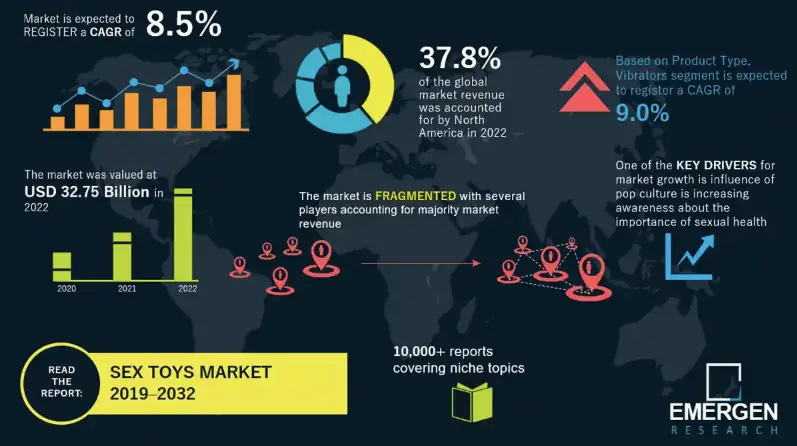
In 2025, women’s pleasure tech is judged less by peak intensity and more by reliability, safety and privacy. With a market sized at USD 32.75B in 2022 and growing at about 8.5% CAGR, demand concentrates on low-latency app control, quiet hardware, IPX-rated cleaning, USB-C/magnetic charging, and privacy-by-design—while North America leads by share and APAC leads by growth.
I. Executive Summary
Market Size and Growth
- The global sex toys market was about USD 32.75B in 2022 and is expected to grow at around 8.5% CAGR from 2019 to 2032.
- Another update shows USD 37.8B in 2024, reaching USD 88.5B by 2034, with a CAGR of 8.9%.
Regional Trends
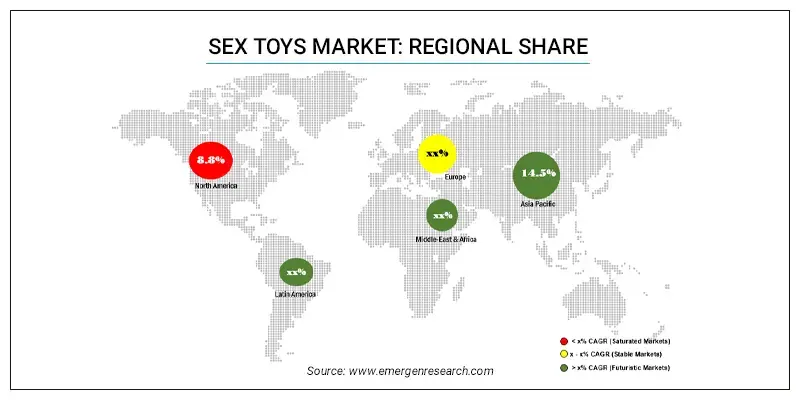
- North America is the largest market, with about 38% share in 2024.
- Asia-Pacific is the fastest-growing region, with the highest CAGR in the forecast period.
Product Segments
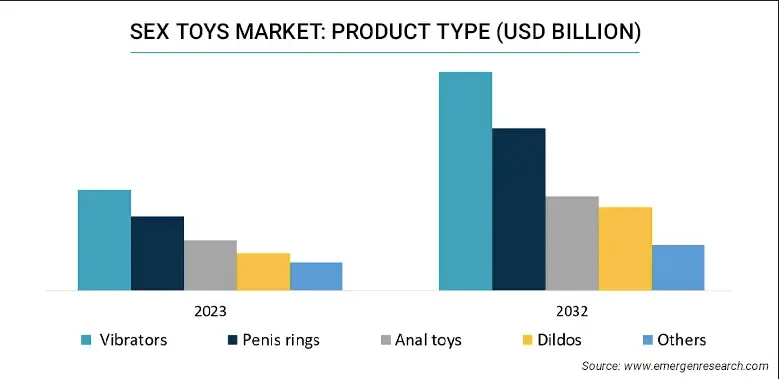
- Vibrators are the leading product type, making up about 42% of the market in 2024.
- Other segments like anal toys, wearables, and Kegel trainers are smaller but rising.
Key Features Customers Expect in 2025
- Low-latency app control (stable pairing, no delays).
- Quiet, “rumbly” motors instead of loud buzzing.
- IPX-rated water resistance for easy cleaning.
- USB-C or magnetic charging with clear battery indicators.
- Privacy by design: offline use, minimum data, encryption, and clear consent.
Compliance and Safety (for B2B buyers)
- Materials/Chemicals: RoHS, REACH for California, Prop 65.
- Battery/Charging: UN38. 3 for shipment; IEC standards over charge and short circuit protection.
- Wireless/EMC: FCC or equivalent for Bluetooth devices.
- Wording: Avoid “FDA-approved sex toys.” If tested, clearly state the ISO 10993 standard or similar.
Implications for Brands and Distributors
- Emphasize privacy-by-default (offline mode, encryption, transparent data policy).
- Display IPX rating, charging method and travel lock on product pages.
- Prepare a full compliance pack (RoHS, REACH, UN38.3, FCC, Prop 65, etc.).
- Focus on vibrators as the growth driver, with add-ons like wearables, air-pulse, and warming toys.
Method and Sources
- Main data: Emergen Research, Sex Toys Market 2019–2032.
- Figures differ slightly by year and method; this summary keeps a consistent baseline.
II. Market Overview & Regional Trends
Main Drivers of Growth
- Changing views of sexual wellness: toys are now seen as part of self-care.
- E-commerce and discreet shipping make products easier to buy.
- Improved materials and safer design, the thinking goes, engender customer trust.
- Social media and health influencers reduce stigma and open discussion.
Regional Highlights
- North America: Largest market. Stronges online retail and high purchasing power drive growth. The buyers are looking for speedy delivery, guaranteed quality and discreet service.
- Europe: Focus on compliance and sustainability. RoHS, REACH products, eco-friendly packing items sell very well.
- Asia-Pacific (APAC): Fastest-growing region. Young buyers in China, Japan, and South Korea prefer compact, quiet, and affordable products.
- Latin America: Expanding online sales in Brazil and Mexico. Demand for safe but lower-priced toys.
- Middle East & Africa (MEA): Smaller share, but urban centers show new opportunities. Cultural and legal limits remain.
Implications for the Industry
- Companies must adapt to local rules and values—compliance in Europe, affordability in Latin America, discretion in APAC.
- Vibrators are still the primary growth driver, but wearables and dual-use toys are seeing momentum in younger markets.
- B2B buyers would also do well to look at regional diversity as a signpost for product design, pricing and marketing.
III. Key Technologies in 2025
Now, technology is no longer just about adding new vibration modes. It is 2025 and in the future sex toy industry, tools are reliable, private and increasingly AI-driven. Connectivity, motors, safety and privacy are the mundane essentials; AI is about smarter personalization.
Connectivity and Control
Low-latency Bluetooth is now the standard. Users want fast pairing, stable signals, and simple apps. Remote play is smoother, and offline mode is essential for privacy.
Motors and Stimulation
“Rumbly” motors that deliver deep and quiet vibrations have replaced high-pitched buzzing. Dual-motor and multi-zone stimulation give more variety. Air-pulse and suction tech continue to attract attention.
Heating and Safety Features
Heating elements are common, but will need protection from over-temperature. Intuitive battery and charging analyzers to trust the product every day.
Power and Charging
USB-C and magnetic charging are common. Quick charging and longer battery life support travel and frequent use. Many devices also include a travel lock for discretion.
Design and Materials
Medical-grade silicone and seamless finishes are expected. IPX-rated water resistance makes toys safe and easy to clean.
AI and On-Device Intelligence
- Toys can now learn user preferences over time (e.g., favorite vibration patterns).
- Some devices offer adaptive modes, adjusting strength based on how the toy is held or how long it has been used.
- Importantly, this AI runs on-device: data is processed locally, not uploaded to the cloud, which supports privacy-by-default.
- For long-distance couples, AI can help sync vibration patterns more smoothly to partner input.
Privacy by Design
Encryption, minimum data collection, and clear consent screens are no longer optional. The option to stay fully offline is a selling point for many buyers.
IV. Consumer Behavior & Use Cases
Discretion and trust matter as much as function. Customers prefer devices that are compact, travel-friendly, and discreet in both design and packaging. A toy that looks like a wellness gadget and arrives in neutral, eco-friendly wrapping lowers the psychological barrier to purchase. Online reviews, influencer guidance, and open conversations on social media further normalize these choices.
Personalization is a rising theme. Buyers seek products that can adjust to their wants, moods and needs; a customizable vibration pattern could be followed by heating elements or adjustable suction intensity. And here’s where A.I. comes in: some smart toys can memorize and emulate favorite patterns, or even recommend new settings based on usage history — all of which happens processing-wise on device to ensure privacy.
Use cases are also diversifying. Solo play is still the backbone, but partnered and long-distance intimacy are also booming. Remote-control apps keep couples connected from far away, while wearables open the door for playful moments throughout everyday life. Meanwhile, pelvic floor trainers and wellness-leaning toys are increasingly being embraced by women who want health as well as pleasure.
The thread running through them all is the idea that consumers are in the market for products that feel safe, empowering and easy to incorporate into your daily life. Brands that can strike the right balance between function, discretion and personalization will become champions in this new wave of self-care driven demand.
V. Privacy & Data Security
Now that many sex toys are app-enabled and packed with smart features, privacy and data security are nonnegotiable. In 2025, buyers demand all of this set up to the same standards they see in health apps or wearables: clear policies; strong protection; local control of data.
Key Concerns for Consumers
- What is collected? Many users want toys that work without creating an account or sending personal data to the cloud.
- Where is data stored? On-device processing is preferred. Customers feel safer if vibration patterns, usage logs, or AI suggestions stay local.
- How is it protected? Encryption (end-to-end or AES standard) and transparent opt-in consent screens build trust.
- Can they stay offline? An offline or local-only mode is now seen as a strong selling point.
Risks if Ignored
Without clear privacy practices, brands face not only loss of trust but also regulatory risk. Laws such as the EU AI Act, GDPR and state-level privacy regulations in the US raise standards for data practices around connected devices.
Best Practices for Brands and B2B Buyers
- Present toys that can function without compulsory accounts.
- Gear the setup toward end-to-end encrypted app-communications.
- Publish easy-to-understand privacy policies (no legalese).
- Offer An Obvious Means of Clearing Data/ Resetting Devices.
- If AI-based personalization is utilized, it must be on-device and opt-in.
- Comply to applicable standards (GDPR in Europe, CCPA/CPRA in California, ISO/IEC 27001 on data security).
Industry Impact
For consumers, robust privacy protection means less fear of experimentation with connected things. Selling toys that are privacy compliant also reduces risk of compliance for distributors and retailers, as well as creating premium positioning. In a market that centers wellness and self-care, trust is just as important as innovation.
VI. Product Segments & Use-Cases
The women’s pleasure product market is not the same as one size fits all. Various sections have different requirements, comfort factors and usage patterns. Vibrators have maintained their dominance of the market in 2025, but other categories of toy are taking off as customers experiment beyond one-player games.
Vibrators – the Core Segment
- Clitoral, bullet, and G-spot vibrators remain the most common choices.
- Buyers want quiet, compact, and travel-safe designs that fit into daily life.
- Vibrators account for more than 40% of global sales
Wearables and Hands-Free Devices
- These toys are designed to be played with anywhere, to be worn under clothes for remote play.
- Common for partnered and long-distance intimacy, frequently used with smartphone apps.
- Growth is robust among younger, tech-savvy users.
Dual-Use and Rabbit-Style Toys
- Pairing internal and external stimulation Dual motors.
- Advanced models now offer air-pulse + vibration, or vibration + thrust modes.
- Favored by buyers looking for variety and customization in a single device.
Anal Toys (Beginner to Advanced)
- From niche to (closer and closer to increasingly) mainstream.
- Buyers prefer body-safe silicone, flared bases for safety, and remote control options.
- Entry-level plug sets and advanced vibrating models both show growth.
Pelvic Floor Trainers (Kegel Devices)
- Positioned at the edge of sexual wellness and health care.
- Marketed for strengthening muscles, improving intimacy, and supporting postpartum recovery.
- More often than not, the devices connect to your phone via an app, offering real-time feedback and gamified workouts.
Emerging Use Cases
- Couples play: Remote apps and partner-synced settings amp up intimacy from miles away.
- Wellness-focused: Devices sold for stress relief, sleep aid or body awareness.
- Discreet everyday play: Designed to be mini and lightweight, truly wireless and sleek body make it incredibly easy to use anytime, anywhere.
Key Takeaway
Vibrators dominate in size, but wearables, anal toys, and pelvic floor trainers are rising. The future is shaped by products that combine discretion, personalization, and wellness framing, making them easier to integrate into daily life.
VII. Design & Materials
Quality in 2025 is directly connected to design and materials. People are wanting products that prioritize safety, convenience and compatibility in their lives as opposed to the flashy ones.
Body-Safe Materials
- High-quality Medical grade silicone and ABS plastic remain the gold standard, remaining non-porous (so they won’t harbor bacteria), hypoallergenic and use safe-the perfect places for water-based lubes.
- Seamless finishes and one-piece molding reduce bacteria build-up and make cleaning easier.
- Soft-touch coatings are desirable, but they must pass stringent durability tests or they may develop problems like skin peeling and stickyness during long periods.
Ergonomic Design
- No pressure point curves make wearing it more comfortable and adds less of a learning curve for beginners.
- Strategically placed handles, grips and a familiar shape help play for an easier hour or two.
- For wearables, fit and Throttling are critical—products should stay put during activities without causing discomfort.
Noise and Discretion
- Quiet operation is now a design priority. “Rumbly” motors that produce deep but low-frequency vibrations are favored over high-pitched buzzing.
- Discreet aesthetics—neutral colors, compact shapes, and wellness-style packaging—help reduce stigma and support mainstream adoption.
Water Resistance and Cleaning
- IPX rated designs (often IPX6 or IPX7) make wash and rinsing in water, such as a bath or shower more convenient.
- The provision of clear cleaning instructions and the inclusion of storage pouches increases customer confidence.
Durability and Testing
- Consumers expect toys to last, even with frequent use.
- Brands are also investing more heavily in life-cycle testing to make sure motors, coating and charging systems can stand up under repeated stress for years.
- Visible quality checks and certifications build trust, especially in a B2B market where distributors want to reduce the rate of returns.
Key Trend
Design and materials are not afterthoughts—they are what make innovation believable. A toy with AI or app control will only succeed if it feels safe, ergonomic, and discreet in the user’s hand.
VIII. Compliance & Safety
Compliance is never simply a box to tick: it’s the very bedrock on which trust between brands, distributors and end users can be built. In 2025, adult products are considered more like wellness devices; there is higher scrutiny for material safety, electrical testing and data privacy.
Materials & Chemical Safety
- RoHS (Restriction of Hazardous Substances) and REACH (Registration, Evaluation, Authorisation and Restriction of Chemicals) apply across Europe and many importing regions.
- For the US market California Proposition 65 On statement, if certain types of chemicals are present it is required to warn customers on these label.
- Use only body-safe, non-toxic materials (such as medical-grade silicone or ABS plastic) and supported by clear test reports.
Electrical & Battery Standards
- Rechargeable toys shall meet UN38. 3 for lithium battery transport.
- Safety standards for electronics under IEC 62368-1 (or equivalent), over charge, over discharge and short circuit protection.
- Quick-charging systems and magnetic connectors must survive durability and safety tests.
Wireless & Data Regulations
- Bluetooth or Wi-Fi enabled toys were required to meet FCC (US), CE RED Directive (Europe) or local wireless standards.
- Connected devices are expected to abide by privacy frameworks such as GDPR (Europe) and CPRA/CCPA (California).
- Transparency in data collection and an explicit offline-use mode make the device compliant with the upcoming EU AI Act.
Labeling & Packaging
- Products shall be marked with CE standard, WEEE signs and safety logos if necessary.
- Green packaging preferred, but still must comply can import labeling laws (language, safety warning, age of consuemr).
- B2B orders have shipping cartons and customs clearance documentation requirements with battery handling labels.
Testing & Certification
- Brands are now also expected to share independent lab reports (third-party tests), including results for material biocompatibility, chemical safety, and EMC (electromagnetic compatibility).
- Claims of “skin-safe” or “body safe”, for example, should be substantiated with ISO 10993 biocompatibility testing.
- Retailers and demand more and more to have compliance pack with RoHS, REACH, UN38. 3, CE/FCC certs with QC reports.
Key Takeaway
Compliance is now a selling point, rather than a burden. B2B partners require products coming to them tested for reliability, with ready-to-share certificates, safe labeling. In a world where reputation is life, and there’s no excuse for unsafe products, demonstrating compliance helps brands differentiate themselves in the market and earn long-term trust.
IX. For Brands & Distributors (B2B)
For B2B buyers, the women’s sex toy market in 2025 is all about compliance, trust and speed to market. It’s the fastest-growing brands that innovate and at the same time, make it easy for distributors and retail to sell safely and with confidence.
1. Minimum Order & Supply Chain
- Flexible MOQ (minimum order qty) options support new comers test the market.
- Functional JIT production+SSC will mitigate the risk of out-of-stock conditions in the peak-demand season.
- ERP and live tracking systems provide distributors insight to production and shipping statuses.
2. Compliance Package
- Distributors require an “off-the-shelf” compliance kit: RoHS, REACH and UN38. 3, CE/FCC and to Prop 65 when required.
- Import clearance is quicker with third party test reports (ISO 10993 biocompatibility, EMC, battery safety) and retail trust is increased.
- Without this package, merchants’ goods may be delayed, come with added expense or be rejected at customs.
3. Quality Control & After-Sales
- B2B partners appreciate transparent AQL (Acceptable Quality Level) inspection reports prior to be shipped.
- Clear warranty terms and after-sales support help prevent conflicts.
- Honest and open returns and replacements generally generates long-term loyalty.
4. Packaging & Branding
- Retail-ready packaging and multi-language labeling is a requirement for sales overseas.
- Environmentally-friendly packaging that also provides discretion, is a win-win for both compliance and consumers.
- Private labels and ODM customization are core for distributors who are shaping up categorically exclusive private label.
5. Logistics & Regional Strategy
- Air freights with products which include lithium batteries must have one document and label of special handling.
- Regional hubs (read: US, EU, Asia) mean faster shipping times and local customer service.
- Understanding local regulations—such as GDPR in Europe or Prop 65 in California—prevents compliance risks downstream.
Key Takeaway
B2B victories in this sector require more than a great product. Distributors are looking for certainty of compliance, fast replenishment and good after-sales networks. Brands that offer full support—at the certification level as well as with packaging options—become the go-to partner for global organizations.
X. FAQ
A quality product, they should be made of body-safe materials (medical-grade silicone will do), easy to clean and quiet. Buyers also seek USB-C or, preferably, magnetic charging; low-latency app control; and strong privacy safeguards.
Yes, if the highest standards are followed. Look for RoHS/REACH compliance, UN38. 3 certified battery and transparent lab test report. Safety also means encryption and storing data locally if the toy is app-driven.
They are a popular tool that many women use to help reduce stress, improve sleep, and become more in tune with their bodies. Kegel trainers also assist in the strengthening of pelvic floor muscles, leading to better intimacy and postpartum recovery.
For targeted touch, clitoral vibrators, bullets and air-pulse toys take the top spots. These styles are small, quiet and discreet to use.
Ask for compliance pack (RoHS, REACH, UN38. 3, FCC/CE) and AQL reports. Ensure packing complies with local labeling rules, and after-sell system is clear.

Related News & Posts
- Safety of the Adult Toy Manufacturing Industry
- Luxe Vision: Smart Vibrator for Women’s Intimate Wellness
- Gaia Empower Kegel Trainer Vibrator – Lavender
- Couples Sex Toys in Australia: Market Trends 2025
- Asia Pacific Sex Toy Market: Rising Demand, Shifting Norms
- 2025 U.S. Sex Toys Market Trends and Forecasts
- Privacy Policy
- Cookie Policy