


SEX TOY COMPLIANCE CHECKLIST FOR IMPORTERS
Compliance helps you sell with confidence
In sexual wellness business, trust starts with safety. Consumers value body-safe sex toys and a pleasant experience. Sellers value faster sales and fewer after-sales problems. As a adult toy manufacturer, we value both: helping brands sell with confidence and helping consumers buy with peace of mind. That is why compliance matters.
What “compliance” truly means
In practice, real compliance is a system. It includes safer materials, product design checks, basic safety and performance tests, and clear package and user instructions. This is how brands reduce risk before launch, avoid claim issues, and keep customer service simple.
It also helps to separate common terms:
International standards / industry standards: what the product should meet (the rules to follow).
Test reports: the test scope, methods, and results (the evidence).
Declarations / compliance documents: what the brand or manufacturer states for a specific market (the paperwork set).
What you need by product type
With that in mind, different products face different risks. So the compliance focus is not “one-size-fits-all”. A simple way is to group sex toys into two types, then match the right safety standards, documents, and checks.
No Electronics Products
Examples: dildos, plugs, kegel balls, sleeves.
Main focus: material safety, surface quality, and clear use instructions.
What to request:
- Material statement (e.g., silicone / glass / stainless steel)
- Restricted substances / chemical compliance statement (market-specific)
- Basic safety notes for packaging and user instructions (cleaning, storage, and which lubricants are safe to use)
Quick checks:
- Does the document match the exact material and SKU/series?
- Are cleaning and use warnings clear and realistic for the product?
Electronic Products
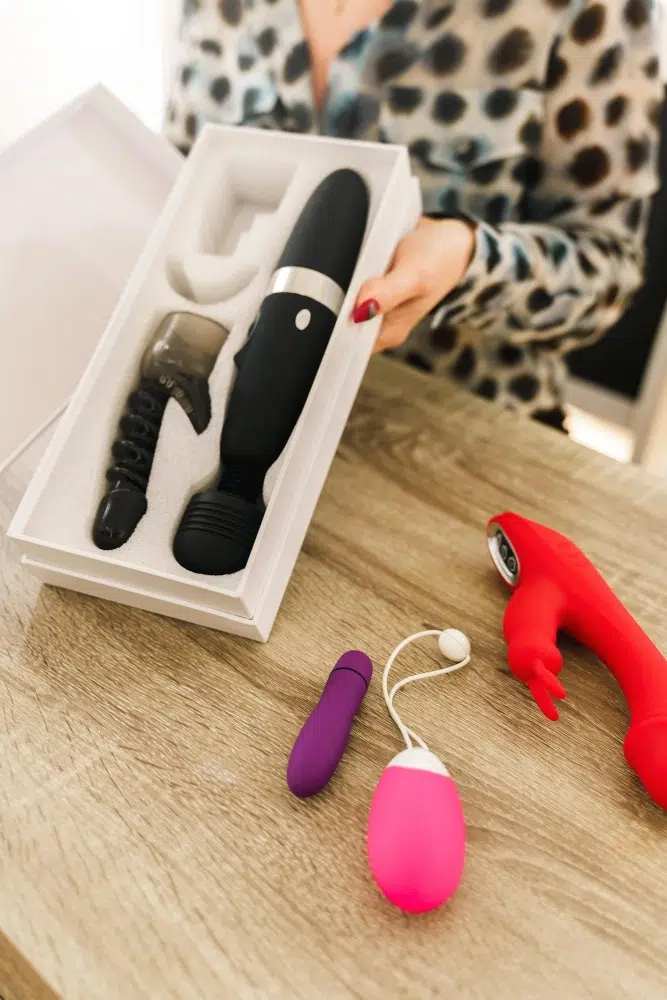
Examples: vibrators, suction toys, remote-control toys, app-controlled toys.
Main focus: electrical safety, sealed structure (if waterproof claims), and stable performance.
What to request:
- Safety and performance test reports for the finished product (not only raw materials)
- Statements for electronics-related requirements in your target market
- Packaging/user instructions that match the real functions and limits (charging, waterproof level, warnings)
Quick checks:
- Do the test reports cover the final assembled product or only parts?
- Do product claims match the documents (especially “waterproof”, “medical”, “therapy”, etc.)?
Key safety standards and certificates
Next, different markets value different risks. Here are the most common names importers see, what they generally cover, and what to request.
CE (EU)
Request: EU Declaration of Conformity (DoC) + supporting test reports for the finished product.

RoHS (EU/UK)
Request: RoHS-related test report or compliance statement for the electronic parts/product.

FCC (US)
Request: FCC-related documentation for the final product or the wireless module used.

UKCA (UK)
Request: UK Declaration + supporting documentation (similar logic to EU, but UK-focused).

ISO 9001 / ISO 13485
Request: Valid certificates + scope (make sure it matches the factory/site you are buying from).

IP ratings
Request: Waterproof test report for the finished product, and make sure packaging claims match the tested level.

FDA (US)
Request: FDA documents from the supplier, such as registration and listing details when required. Include support materials and safety documents that match the SKU or series.
CPSC
Tip: Don’t make medical claims unless regulators classify the product as a medical device.
ISO 3533 explained
ISO 3533:2021 is an international safety standard. It defines safety requirements for sex toys intended for direct contact with genitalia, the anus, or both. They developed it because adult toys involve more sensitive body contact than many other products. That’s why the standard sets clearer, product-specific safety requirements.
For importers and brands, ISO 3533 is useful because it gives a clear safety framework for adult toys. In practice, it helps you review a product in four simple areas:
What touches the body, and whether the supplier can provide material and chemical compliance documents.
Whether the structure is safe for use (no sharp edges, safe shape, stable parts).
Whether you can clean the product safely, and whether the instructions match the material and design.
Whether the packaging and manual include clear warnings, use steps, and storage notes.
If a supplier claims ISO 3533 alignment, you can request documents for your SKU or product series. Also, you can request the final packaging and manual copy used in production. This helps you confirm claims before launch and lowers the risk of avoidable complaints and returns.
Your Compliance Pack Checklist
A “compliance pack” is the small set of files that helps you review a product quickly and sell it with fewer surprises. Ask your supplier to prepare it by SKU or by product series (not a random mix of documents).
Here is a buyer-friendly checklist:
- Product identification sheet: SKU/series name, photos, key specs, and materials.
- Material declaration: the main material(s) and any coatings or inserts that contact the body.
- Market compliance statement: a short statement that shows which requirements the product meets by design (EU/US/UK, etc.).
- Relevant test reports: material/chemical tests, safety/performance tests for the finished product, and waterproof testing for IP rating.
- Labeling + user instructions: the packaging text and manual used in production, including warnings, cleaning steps, storage, and charging notes.
- Quality and batch control basics: batch/lot code rules, incoming material checks, and pre-shipment inspection points.
If the product includes a lithium battery or ships as a rechargeable item, add:
- UN38.3 (when required by your carrier/route)
- MSDS/SDS (as requested by your forwarder)
- Battery spec info tied to your SKU (battery model and rating)
This checklist doesn’t aim to create “more paperwork.” It aims to help you verify claims faster, reduce customer service issues, and lower avoidable returns.
Shipping battery-powered sex toys
Also, if a sex toy is rechargeable or ships with a lithium battery, shipping often causes the order delays. This section focuses on transport requirements, not product safety standards for use. The document outlines the transport rules that carriers and forwarders must follow.
What to request from your supplier
- UN38.3 (commonly requested for lithium battery transport, especially for air/express)
- SDS/MSDS (often requested by forwarders for batteries or packed goods)
- Battery spec sheet linked to your SKU (battery model, Wh rating, and packing type: built-in / packed with / spare)
Quick checks
- Do the documents match the exact battery model used in your product?
- Are the product name/SKU and packing details consistent across files?
- Are the files the most recent versions accepted by your forwarder?
Why this matters: smoother shipping means fewer launch delays, fewer lost-in-transit issues, and fewer customer service headaches.
Why not every SKU has a full certificate set
In real manufacturing, factories may have hundreds or thousands of SKUs, and certification can be costly and time-consuming. That is why many suppliers and wholesalers certify a product series (a “family” with the same core structure and materials). Most of them do this instead of certifying every small variant, except for us.
For buyers, the key point is whether the document scope matches the product. Before you use any document for listings, customs, or platform review, confirm it matches your SKU/series. Check key compliance details, like body-contact materials, electronics or wireless modules, battery type, and main structure.
Best practice:
- Choose a lead model (your main SKU) for testing and documentation.
- Keep the BOM and key materials stable during production (changes may require an update or re-test).
- For new variants (size, motor, battery, wireless), ask your supplier if the current reports still apply. If not, confirm whether we need updated testing and a new report.
10-minute document verification
Once you have the files, you do not need to be a compliance expert to catch common issues. Use this quick check before you place a PO:
Match the scope to your SKU
Does the document clearly match your product (SKU/series, material, key functions such as wireless, heating, or waterproof claims)?
Check dates and versions
Is the report recent enough for your market and your platform? Are you using the latest manual and packaging text that will **enter** mass production?
Confirm the testing level
For electronic toys, make sure reports cover the finished product, not only raw materials or single components.
Verify the lab and batch details
Look for the testing lab name, report ID, and basic batch records (batch/lot rules or inspection records). If any item is missing, follow up before confirming the order.
Red flags
Unclear product name, copied scope, missing lab details, or packaging claims not supported by the documents. The documents may also not match the battery model you are shipping.
FAQ
For electronic or wireless products, importers often ask for FCC documentation. For example: FCC ID for wireless modules, or FCC compliance documents for the final product.
For rechargeable items, freight forwarders commonly request UN38.3 plus SDS/MSDS for lithium battery transport. In the US, you may also see the Consumer Product Safety Commission (CPSC) in compliance discussions. This makes accurate claims and clear documentation essential.
For the EU, electronic products usually need CE marking. You must support this with an EU Declaration of Conformity (DoC). It also needs relevant test reports.
Customers commonly request RoHS documentation for electrical/electronic items. For Great Britain (UK), buyers often ask for UKCA supported by a UK Declaration of Conformity. Meanwhile, ensure compliance with UK versions of RoHS and chemical regulations where applicable. If you claim waterproof functionality, keep the IP test report consistent with packaging and manuals.
If your product uses Bluetooth/2.4GHz wireless, you typically need local radio approval in the destination country. For example:
MIC (Japan) in Japan
KC in South Korea
- IMDA in Singapore
- SIRIM in Malaysia
- SDPPI in Indonesia
- NBTC in Thailand
- MIC in Vietnam
- NTC in the Philippines.
For rechargeable products shipped by air/express, forwarders commonly request UN38.3 and SDS/MSDS. Importers also usually request a materials declaration + labeling/manual files aligned with your product claims.
For wireless products, Brazil ANATEL is the best-known mandatory approval in the region. Other destinations may require local telecom approval such as ENACOM (Argentina) or SUBTEL (Chile), depending on where you ship.
For non-wireless items, importers often start with a solid materials and safety documentation set. Local authorities may accept EU-style documentation as supporting evidence. However, you should focus heavily on Spanish/Portuguese labeling and manuals for customs and retail readiness.
For electronic and wireless products, buyers commonly look for RCM (Regulatory Compliance Mark) evidence under ACMA rules. This is especially important when the product includes wireless (Bluetooth/radio) functions.
For rechargeable items, some routes and carriers will request UN38.3 and SDS/MSDS. Keep manuals and packaging consistent with supported claims (for example, waterproof level backed by an IP test report).
Where to find our compliance documents
Finally, for a quick overview of Gaia’s certifications, you can visit our Certificates page. It lists our current certificates and key test reports in one place, so your team can review them anytime.